





Awesome FLOTUS being awesome.
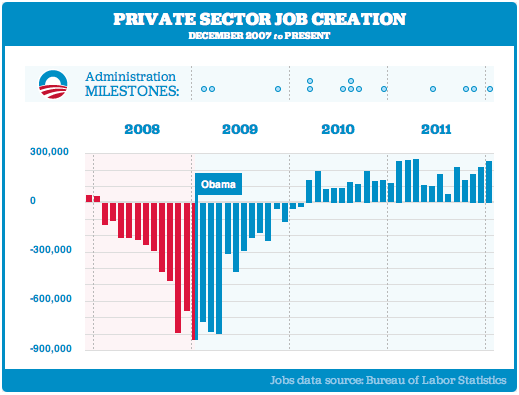
In case you were wondering. Being president is hard.
A little off topic here, but eye-opening on your kid’s/students’ perceptions of marketing and branding. Does her opinion give insights into parent choices? My favorite: “That is on a controller that you use to control the TV at Ryan’s house.”
When a five-year-old girl recognizes your brand logo, you’ve done it right. Of course, when your dad is in the logo design business, you might have a leg up. Adam Ladd’s daughter knows her logos, but as far as big cats go, she just likes cheetahs.
(Source: https://www.youtube.com/)
You Are the Average of Your Five Closest Friends.
bufr:
I won’t name names, so we’ll call her Jane.
Jane’s five closest friends are two engineers at Google, an engineer at Eventbrite, an architect, and her father (which is so cute), who is the president of a national soccer team in Jane’s home country.
Jane graduated with a degree in Business…
The people who we perceive to be the happiest are those who go about their lives as if unfazed by failure, and who strive with an astonishing regularity towards improving themselves while in the presence of negativity. Not to mention the fact that not only do they appear to be getting better at whatever it is that they are doing, but they also seem to stop and help others along the way.
twitter.com/heycheri

Xmas came from India, powered by @Etsy! (Taken with instagram)
Mark Zuckerberg gets tagging lessons from David Choe.
(Source: https://www.youtube.com/)
Communicating Community.
I used to think of communication in one-dimensional terms: using language to represent our empirical observations to each other. The Internet has taught me some incredible things about how we communicate with each other, and what creates community. We have ideas, we need a medium of expressing them. The most popular medium is language, which engages our intellect using shared conventions (logic, cultural context, etc.).
With the widespread adoption of sites like Instagram, Pinterest, Path, Svpply, the trend seems to be clear. We are no longer using words to communicate on the Internet. What was so attractive about Blogger that hasn’t really been discussed rigorously, though we all understand it intuitively, was that it created a platform for anyone to express herself on the Internet. By referring to expression, I don’t mean people who have something to say, in the sense of politics. I more mean it in the sense of the girl in middle school who decides to dye her hair purple. It’s a platform for the aesthete in all of us. It is a way of expressing an emotional truth through metaphor. And language is a metaphorical representation of empirical observations – as is art. The difference, though, is that the conventions of language are largely fixed, bound in logic and OED definition*, while those of art are fluid and constantly in evolution. And so, when done well, art can better represent emotional truth than language – or, at least, with less friction. Sure, we all know that, right. Communities and spaces exist where we can share emotional truths with groups of people. This happens in Church, and through cultural traditions, in fashion and in song, where we are not expressing opinions through language, but through art. The evolution of the networking on the internet away from, say, long form content as Elad Gil describes it, to express aesthetic sensibility, to art. Elad wisely says that it is the friction of adopting a longform piece of content that prevents longform content communities from going viral – a problem Pinterest clearly does not have.
It is the act of sharing emotional truth, as directly and purely as we can, that makes a community. The generation of social networking sites that can properly capitalize on this trend will see great rewards, as will their members. Pinterest is an obvious example, and its explosive growth (11 million monthly views in December, invite-only, only a year old) reflects an interesting evolution in expressing oneself in the name of community. They have done so without language whatsoever, and purely through images. The effects are immediate and striking. But here is a worry. Once a mode of communication is made manifest, enters cultural consciousness, it inevitably falls under a desire for convention, order, and logic. And does that damage the purity of emotional truth? If we are all explicitly trying to express our aesthetic sensibilities as a way of creating community, can we still do it as well? Does bubbling an experience like this up from the subconscious succeed in invalidating it? Personal brand is a subject of irony among the digerati of late. That’s a worry about what’s happening online. We’re so explicit about how we communicate, that it doesn’t work anymore. But that’s just a thought – this is meant to be an optimistic post.
*Language is fluid, but against the demands of the form. Art is necessarily fluid.
For Hollywood to be killed, the Internet needs to focus on a metric other than eyeballs. It’s not about mass, it’s about good. That’s absolutely anti-YouTube and anti-Farmville and any other content which we expect to be rapid, mass and disposable. Disposable content isn’t bad, it’s just not everything. And as long as that’s all that the Valley is putting out, we won’t kill Hollywood.
Killing Hollywood Will Require Learning Hollywood’s Game | PandoDaily (via mbb)
Reminds me of this New Yorker article that also recognizes that Hollywood is about scarcity, and Silicon Valley about scale. And it’s not that we don’t understand Hollywood’s game. As Fred Wilson points out, it’s that we don’t like it. It seems to me that both sides of the argument (we need to focus on more than eyeballs, and that scarcity is a fucked up thing) have merit, and I’m wondering if Sarah would suggest that we need to start to emulate some of Hollywood’s M.O., because I don’t think that’s right at all. But I’m not sure what the right solution is.
 Musings